
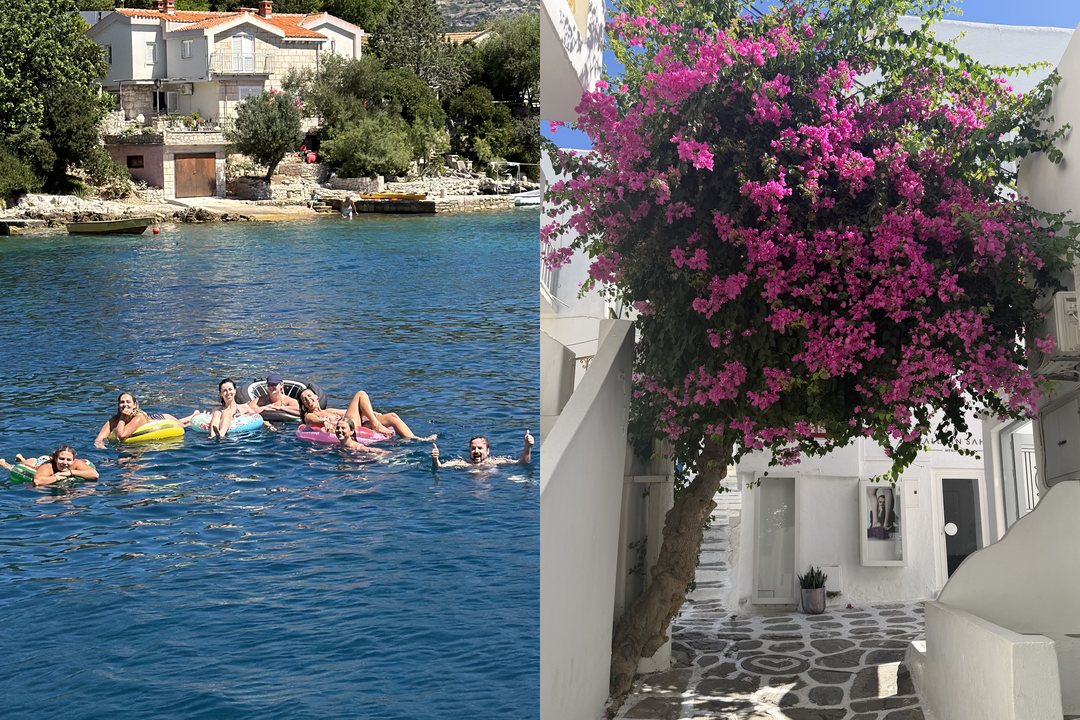

If you’ve seen a cowboy hat wandering around Hvar, Santorini or anywhere else in Europe with a group behind it, we may have already crossed paths. I’m Tom, the hat-wearing trip manager for Contiki, and I’ve been leading 18 to 35-year-olds around Europe since 2023. I started out on the big multi-country Europe trips and have since specialized in my favorite part of Europe: the Balkans and the Greek islands. That means I lead both Croatia sailing trips and Greek island hopping trips, and I get asked which one is better all the time.

From the outside, they look pretty similar. Crystal-clear water, endless sunshine, and dance floors that make you wish the night would never end. But are you sleeping on a boat or in a hotel? Will the towns make you feel like you’re in Mamma Mia or Game of Thrones? And possibly the most important question: are you having burek or gyros after a night out?
Here’s how sailing the Croatian coast and islands and hopping around the Greek islands actually compare, so you can decide which trip to book by the end of this.
Croatia sailing or Greek island hopping: which one is for you?
I’ll keep this as simple as possible for anyone who, like me, gets easily distracted by 14 open tabs and then TikTok time. Here we go.
Choose Croatia sailing if you want:
- Endless swimming in quiet, secluded bays
- One accommodation for the whole trip (unpack once, done)
- That Below Deck yacht feeling
- A shorter trip: the Croatia sailing trips I lead are 8 days (7 nights)
Choose Greek island hopping if you want:
- Those iconic island views
- To live your Mamma Mia dream
- To catch a specific artist or DJ playing on the islands while you’re there
- More time in each place and a longer trip overall: the Greek island hopping trips I lead are 11 days (10 nights)
| Croatia sailing | Greek island hopping | |
|---|---|---|
| Where you sleep | The same boat cabin all trip | Hotels, changing as you hop islands |
| Room size | Smaller cabins | Bigger hotel rooms |
| Daily rhythm | Sail, Eat, Swim, Eat, Explore, Party, Repeat | Ferry, Check In, Explore or Beach, Eat, Party, Repeat |
| Time in the water | Swim stops in quiet bays most days | Hotel pools and beaches |
| Sunbeds | On deck, included | Usually extra at the beach |
| Personal space | You’re with your group most of the time | More freedom and time to yourself |
| Nightlife | Happy hour on the boat, then bars and clubs in town | Beach clubs day and night, big-name DJs in peak season |
| Luggage | A backpack usually wins | Either works, but you carry it on and off ferries |
| Trip length (Tom’s trips) | 8 days | 11 days |
| The towns feel like | Game of Thrones | Mamma Mia |
| After a night out | Burek | Gyros |
The biggest difference: boat vs hotel
When people ask me which one they’d prefer, my first question is always the same: do you want to stay on a boat or in a hotel?
In Croatia, you’ll have a smaller cabin but a lot more time in the water, with sunbeds on deck and usually some inflatables to play with. In Greece, you get bigger rooms, more time in the towns themselves and more freedom in your day. The hotels generally have pools, but you’ll pay for sunbeds at the beaches, so how much beach time you get depends on your priorities.
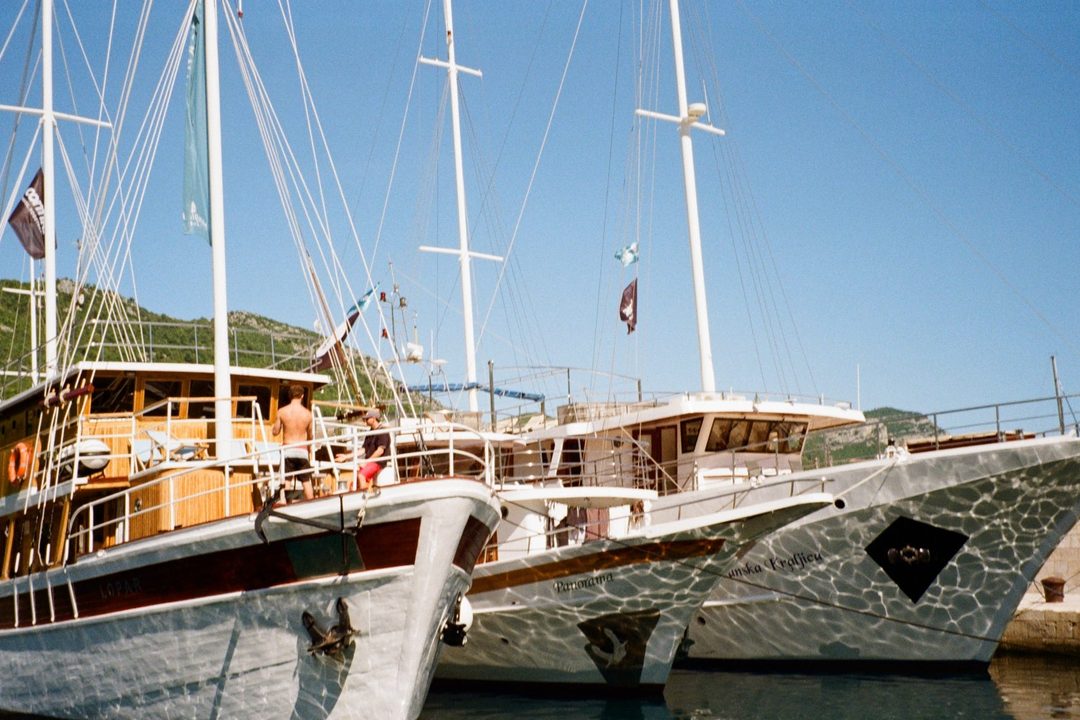
If your first thought is seasickness, don’t let it put you off. In summer the sea is usually calmer (that’s not to say there are never windy days, but let’s be optimists). And whichever trip you pick, you’ll be on the water, either on your boat or on a ferry. It’s part of the experience, and it’s honestly not bad unless you’re especially sensitive.
Maybe it’s easier if I just walk you through a day on each trip.
What a typical day sailing Croatia looks like
Croatia sailing = Sail, Eat, Swim, Eat, Explore, Party, Repeat
On a standard day, you wake up and you’re already moving. The boats usually set off very early, so all you need to do is roll out of bed for a relaxed late breakfast around 9 or 10am.
Then you’ll drop anchor in a nice bay, often with just your boat or a few others around, so you can swim in the Adriatic. You can embrace your inner mermaid and spend the whole time in the water, or just work on your tan.
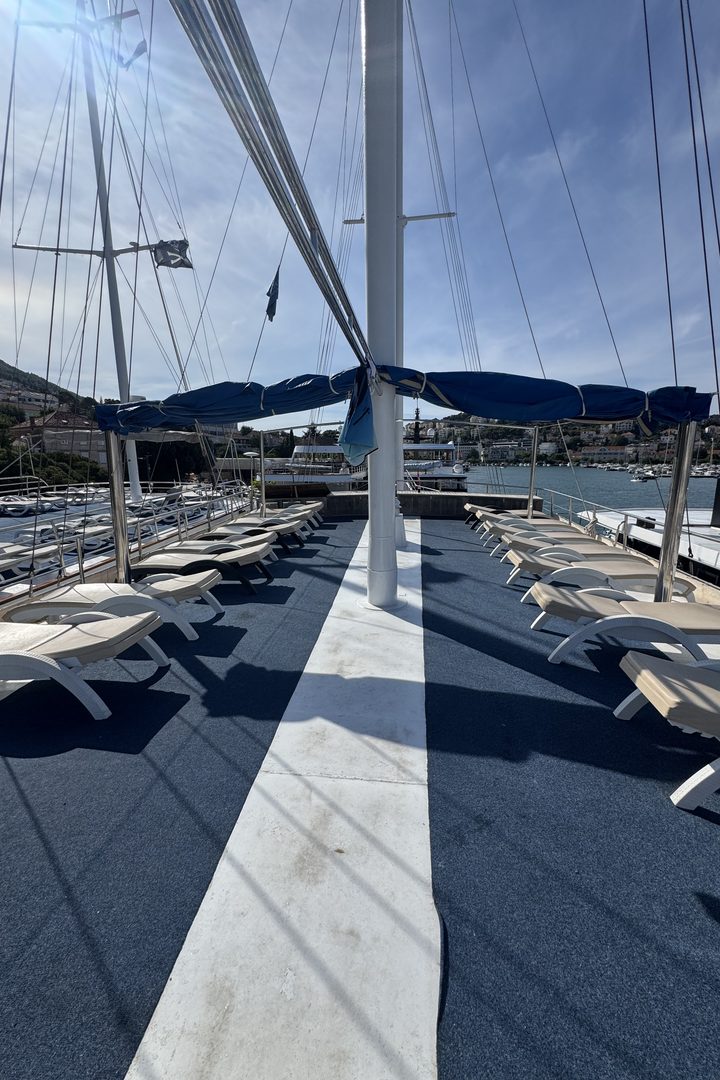
After all that hard work, it’s lunch on board, maybe another swim, and then into town to explore. It’s always amazing to end the day’s wandering with a sunset aperitivo (my go-to is an Aperol spritz).
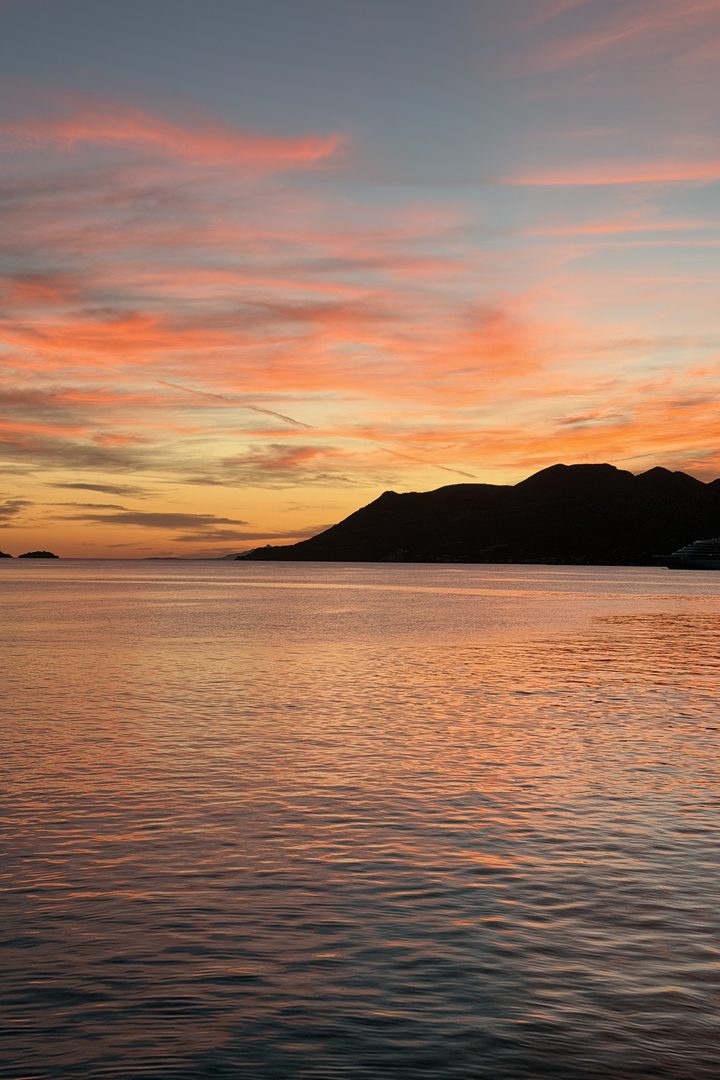
Dinner is either on the boat or in town. Then your boat becomes the cheapest bar in town for happy hour, and the “hour” is usually more like two hours plus. After that, you have to see the real nightlife of these towns, so you hop off one last time and your trip leader shows you the best bars and clubs to dance the night away. Just make sure your late-night alarm is set, so you’re off the dance floor and back on the boat before it sails to the next island.
For me, sailing in Croatia feels every bit like Below Deck, but better, because you’ve got a fun group hyping you up the whole way. I’m not sure about you, but I don’t have six figures lying around to charter my own yacht, so this way you get the experience and your bank account stays a lot happier.
Just don’t expect your crew to be your servants like some guests treat the crew on the show. Don’t get me wrong, they’ll always be there to help you. But one of my favorite things about these trips is getting to know the crew. It’s lovely to get to know some locals, and they sometimes even come out with the group at night, which just adds to the experience.
What a typical day Greek island hopping looks like
Greek island hopping = Ferry, Check In, Explore or Beach, Eat, Party, Repeat
In Greece, you really have two types of days.
The first is a travel day, when you take a ferry to the next island. It usually only takes up half the day or less, so don’t picture a long coach day. You still get a relaxed morning at the hotel before heading to the port, and you usually have the second half of the day on your new island.
The next day is a full day on that island. There’s always plenty to do, or you can just relax by the hotel pool or on a sunbed at the beach.
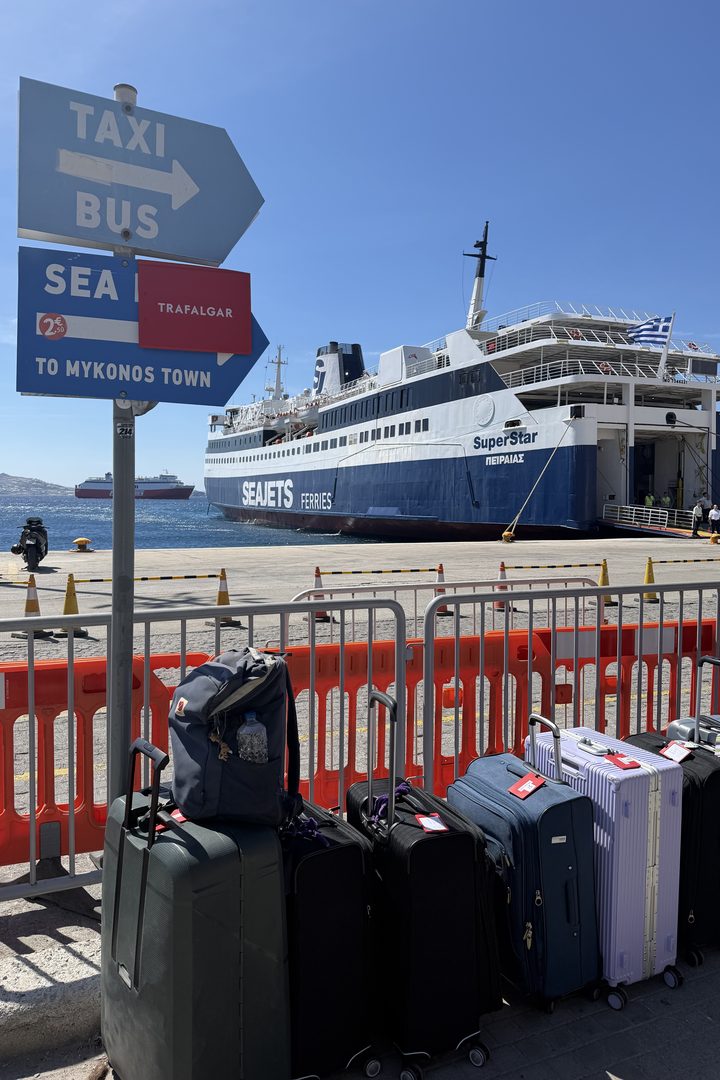
Getting around the Greek islands (and “Greek maybe time”)
Maybe the biggest misconception about the Greek islands is how you get around. It’s not too difficult, and there are lots of public buses. But like the ferries, the schedules are more like a weather report: generally accurate, but not precise.
That’s why trips organize private shuttles for things like going to Oia on Santorini to see the blue domes, so you skip the hurdles every traveler knows come with public transport. Once you’re in the towns, it’s all walking. There are taxis on the islands too, but there aren’t many of them, so on islands like Mykonos they can get expensive fast.
A saying across lots of tour operators is GMT: Greek Maybe Time. Whether it’s the ferries or the buses, you just need patience, a little shrug that it is what it is, and a little faith that they’ll come.
My biggest advice: keep that sense of amazement at what’s around you. Delays are the perfect time to start researching what you want to do or eat on your next island. And most crucially, always have a healthy supply of snacks.
The good news is that when you’re on an organized trip, you avoid most of the nonsense. Your leader knows the ferry procedures and handles the last-minute changes, private shuttles replace the public buses, and they’ll always know the best spots to eat, drink and relax.
What the Greek ferries are actually like
The ferries are bigger than you probably expect, and they’re not as rough as TikTok makes them look (except maybe with a hangover). The seats are like premium economy on a plane, there are cafés and snacks on board, and the ride is generally pretty smooth.
How long you’re on board depends on the distance and the ferry company, but the time flies with a nap, some journaling or a bit of Netflix. Just download anything you want to watch beforehand, because the internet can be in and out.
Swim stops vs beaches: how your time on the water differs
In Croatia, the water comes to you. Most days you’ll anchor in a bay, often with just a few other boats around, and jump straight off the boat. There are sunbeds on deck and usually some inflatables on board, so you can float, swim and tan without going anywhere.
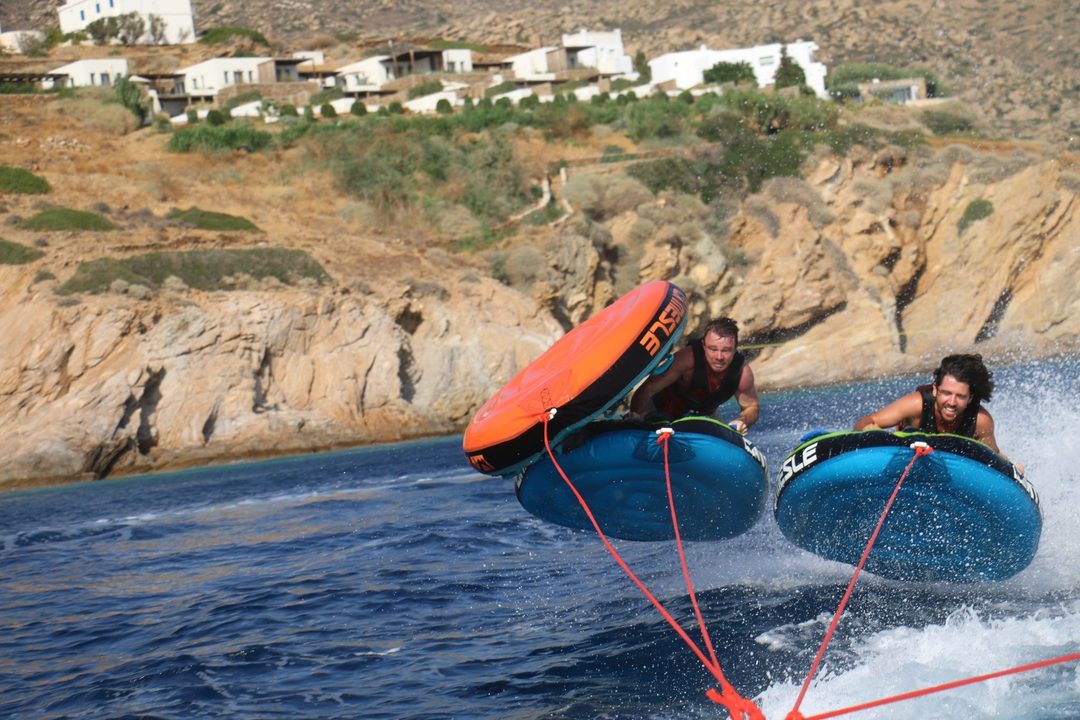
In Greece, you’ll usually have a pool at the hotel, and on your full island days you can head to the beach or pick from plenty of activities. The difference is that beach sunbeds usually cost extra (more on that in the budget section below).
If being in the sea as much as possible is your top priority, Croatia wins. If you’d rather mix beach days with exploring towns and doing your own thing, Greece gives you that.
Boat life vs more independence
On a Croatia sailing trip, you’re living on the boat with your group. Unless you book your own private cabin, you’ll be around people pretty much 24/7. There’s usually somewhere to take a bit of breathing room, whether it’s your cabin or a quiet corner of the deck, and people won’t bother you if you’re reading a book or have your do-not-disturb sunglasses on. You can also find your own space when you’re exploring the towns. But most of the time, you’re surrounded by people.
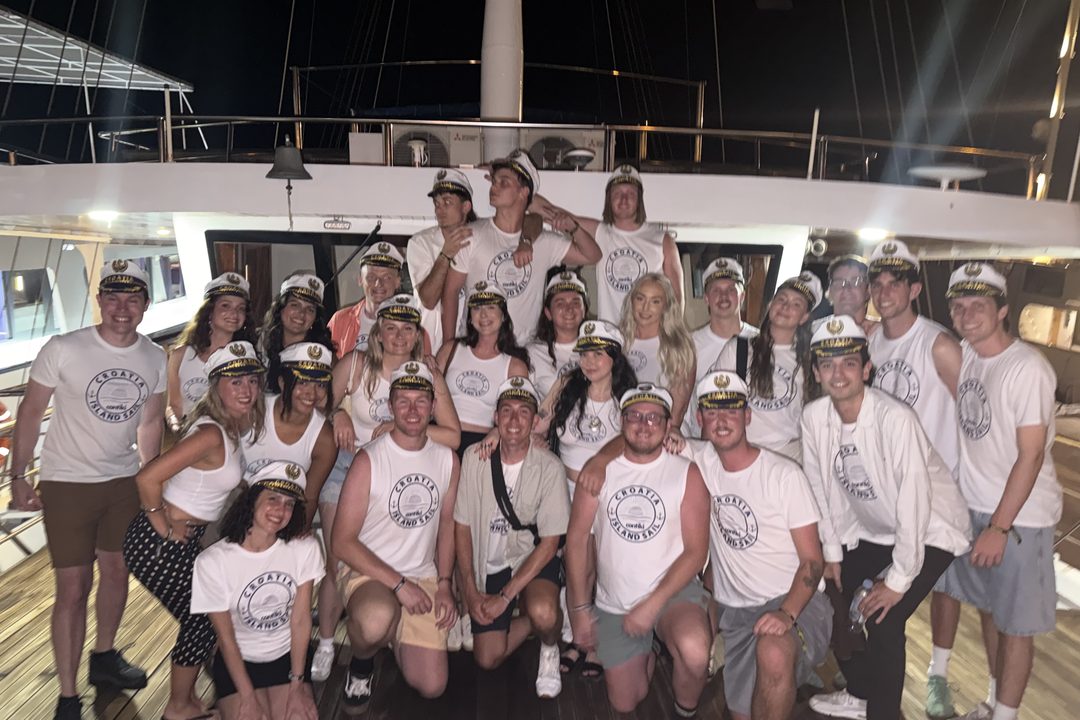
In Greece, you have hotel rooms with more space and more freedom to do your own thing. If you’re an independent person who likes a lot of space to yourself, Greek island hopping might be a better fit for you.
What if you’re not a big drinker?
There’s one misconception that gives me the ick every time I hear someone say “oh, I could never do group travel” or “I couldn’t do a sailing or island hopping trip.” It’s the partying.
People think you won’t enjoy these trips unless you’re a big drinker or a party animal. I’ve done a lot of these trips, I’m 100% NOT a party animal, and I still have an amazing time. So do the travelers on my trips who fall into the more chilled category.
On both trips, you absolutely don’t have to go out every night. Some of my favorite moments are swimming in a quiet bay, lounging on a sunbed, eating at a local taverna that will haunt your foodie dreams in the best way, or just getting lost in the little alleys of these picturesque towns.
Yes, there’s partying. And yes, some people come on these trips just for that. But it’s up to you, and I think it’s better to pick and choose your nights.
You’re also not alone. Over the past few years, I’ve noticed (and other tour leaders I’ve talked to have too) that younger travelers are drinking less on trips. So, in the words of our pop queen Sabrina Carpenter, who I think would be perfect on one of these trips: please, please, please don’t let this misconception stop you from living your Croatian or Greek summer dream.
Nightlife: Croatia’s islands vs the Greek islands
In Croatia, the night usually starts on your own boat. Happy hour on board is the warm-up, then you head into town together and your trip leader takes you to the best bars and clubs.
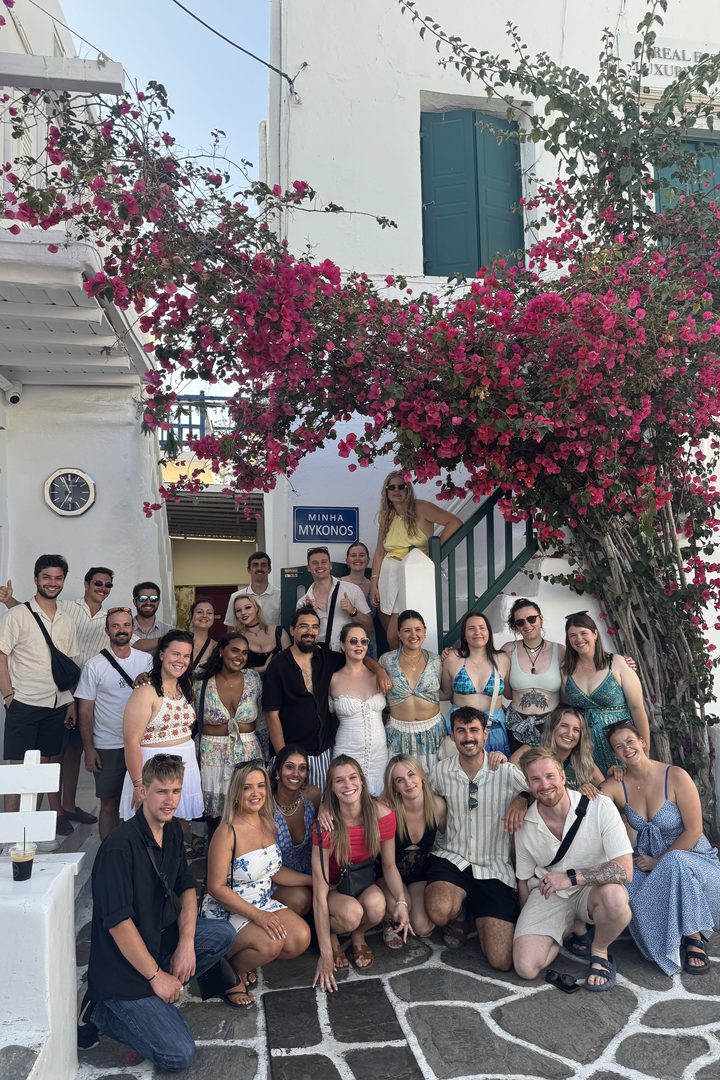
In Greece, the big advantage is that the islands, especially Mykonos, can get some big-name DJs and artists in peak summer. If there’s someone you want to see, it’s worth checking who’s playing before you book, so you can line it up with your time on the islands.
Just check the set time. Greek beach clubs party day and night, so ideally you’d line the event up with your full free day on that island, in case the artist is playing a beach club in the afternoon. At the very least, you’ll have plenty of time to get your fit ready.
What should you budget for?
Optional activities. Both trips offer extra activities that make the trip more hassle-free and help you get more out of each place. My advice is to budget for all of them. Once you’re there and hear more details, you can decide if each one is for you or not.
Food. From what I see on my trips, a main meal costs roughly €20 to €30, more for meat and seafood. In my opinion it’s worth it, maybe just not for every meal. You can keep lunches and even some dinners cheaper with the bakeries, which are different in each country but equally fantastic. And in Greece, there are gyros everywhere.
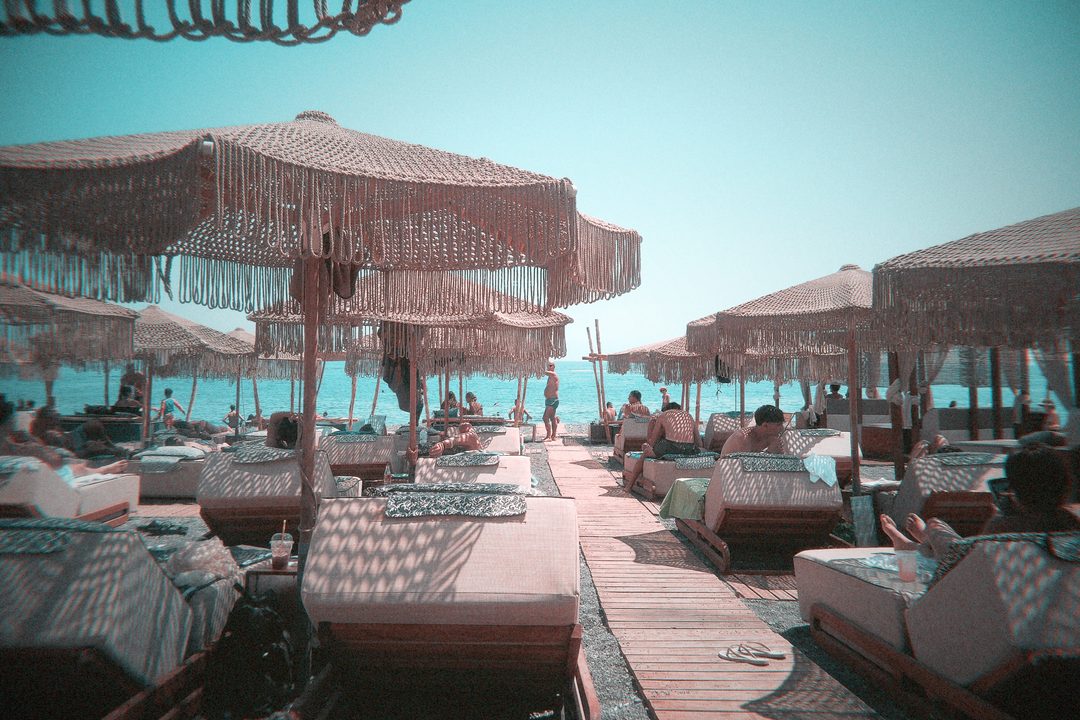
Sunbeds in Greece. Budget for these. In my experience they can range from around €20 to €50 depending on the beach and the time of year, and the famous beach clubs can charge a lot more. They’re usually for the whole day, and some beaches sell them as a set, so if you have a friend you can split the cost. Add any beach club tickets if you’re planning to see a specific event or artist.
Drinks in Croatia. I can’t preach this enough: make the most of happy hour on the boat. Drinks there will always be cheaper than in the clubs, and if you’ve had a couple on board, you can focus on dancing once you’re out instead of buying lots of pricey club drinks.
Your basics. The best way to avoid wasting money on both trips is to stock up on essentials in the big city before you get to the islands. I’m talking sunscreen, after-sun or aloe vera, and any medication you need.
Cash. Cards are accepted in more and more places, but it’s still worth having cash on the islands. It makes splitting bills easier, and it’s handy for small purchases like souvenirs, snacks and drinks. Some smaller businesses may still prefer cash or have a minimum spend for cards. Before you get to the islands, take out what you need from a bank ATM, which usually has lower fees than standalone ATMs like Euronet.
The honest downside of each
Downsides are hard for me, because I love the water, the towns, the food, the people and the cultures. But if I had to sum it up in one thing: if you don’t like the water, relaxing or partying at all, I’m not sure these are the trips for you.
Smaller towns, fewer big sights. The towns are beautiful and the food is exceptional, but these places are much smaller than Europe’s big cities, so there aren’t many museums. There are archaeological sites around the Greek islands and castles in Croatia, but I wouldn’t see them as the main feature of either trip. If swimming in crystal-blue water, tanning on sunbeds, wandering cute little towns or partying all night (even if it’s not every night) sounds good to you, you’re on the right track.
Croatia: less personal space. Like I said above, the cabins are small and you’re around your group most of the time. If you like lots of your own space, Greece has more of it.
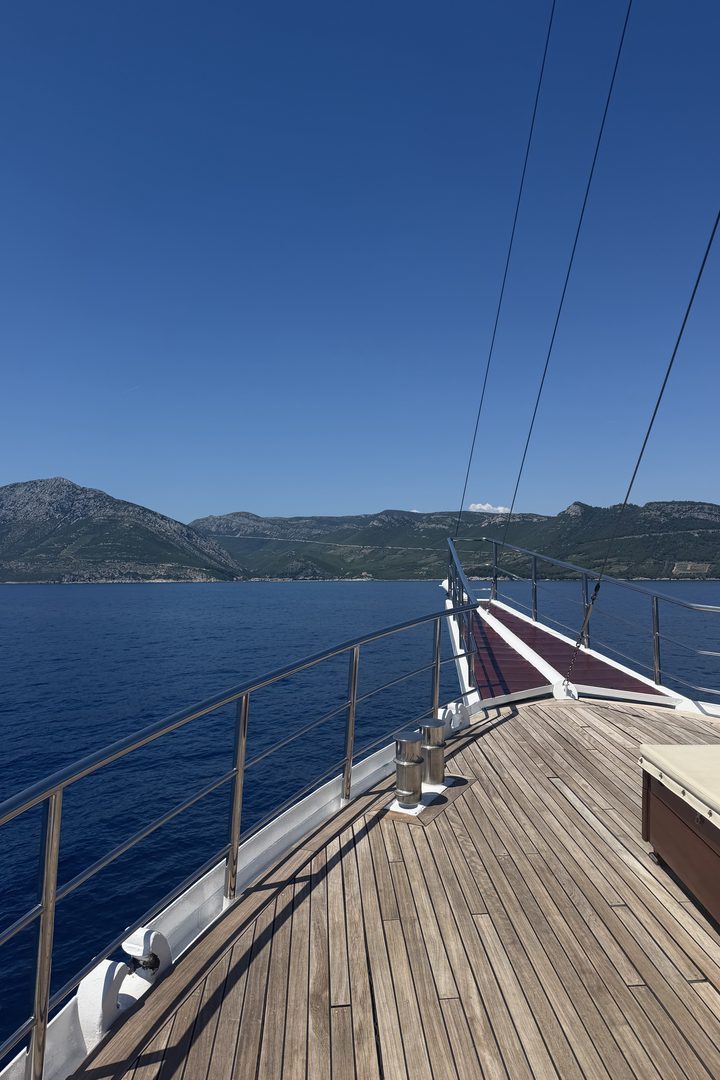
Greece: you’re always on the move. You change hotels as you hop between islands, so packing up and getting your bags to the port becomes part of the routine (which is why my first tip below is about packing).
Tom’s trip tips
Don’t overpack (seriously)
Overpacking is a mistake people make on every kind of trip, but you feel the consequences more on these ones. In Croatia, you have smaller rooms and less space for your things. In Greece, you carry everything yourself on and off the coaches and ferries, which gets really tiring if you’ve overpacked.
You don’t have to bring a backpack, and a suitcase works too, but for Croatia I’d say a backpack wins overall. The rooms are small, so if you’re sharing, you might not both be able to leave your suitcases open all the time like in a hotel room. The good news is that once your bag is on the boat, you won’t need to move it until the end of the trip.
For Greece, either works because the rooms are bigger. It’s more about the weight of the bag. Just remember it’s on you (and any luggage limits your trip has) to get that suitcase on and off the ferries and transfers. As long as you’re happy to move it, you’re all good.
Pack versatile clothes you can mix and match, skip pieces you’d only wear for one specific occasion, and bring one nice outfit for a fancy evening. Natural fabrics like cotton and linen are perfect for the heat, and you’ll look more like a local too.
My method: I do one pack where I’m as harsh as possible. Then I leave it for a while, watch a show or read my book, and do a second round where I question everything.
Keep snacks in your room
The most common mistake I see on the islands is not being ready for the end of the night, and by that I mainly mean snacks. These are small towns, and depending on where you are and how late you stay out, there might be very little open after you leave the bar or near where you’re staying. Always keep snacks in your room for when you realize everything’s closed, or you get back and suddenly feel hungry.
Bring something to make your water less boring
Another little hack: buy some hydration powders or tablets before your trip to add to your water at night and the next morning. It makes waking up a little easier (and plain water just gets a bit boring sometimes).
In Croatia, my favorite is Cedevita, a Croatian vitamin drink powder you might even spot at bars and restaurants. It’s my go-to after a late night, and the purple one is my personal favorite.
So, which one should you choose?
Honestly, neither one sticks out as the better trip. It’s about which one suits you.
Pick Croatia sailing if swimming and tanning time matter most, you love the idea of unpacking once and never changing accommodation, and you want a shorter trip. Just go in knowing the cabins are smaller and you’ll be with your group most of the time.
Pick Greek island hopping if you want a hotel room with more space to spread out, more freedom for yourself and your days, and you have a bit more holiday time. Just know you’ll be on the move every couple of days.
Still can’t decide and have about three weeks free? Why not do both. Either one is also a great way to slow down after some fast-paced travel around Europe.
Want to travel with Tom? Check out his TourRadar guide profile to see the trips he leads and what his travelers say about him.
Ready to go? Browse Croatia sailing trips and Greek island hopping trips.